Managing weight with Hashimoto’s thyroiditis can be challenging. Despite healthy habits, many women find it difficult to lose weight, even with consistent levothyroxine use and normal blood tests. This common frustration has led many to consider GLP-1 receptor agonists, such as Wegovy and Mounjaro. Before exploring these medications, it is important to understand their implications for those with autoimmune thyroid disease.
Why Hashimoto’s Makes Weight Loss Feel Impossible
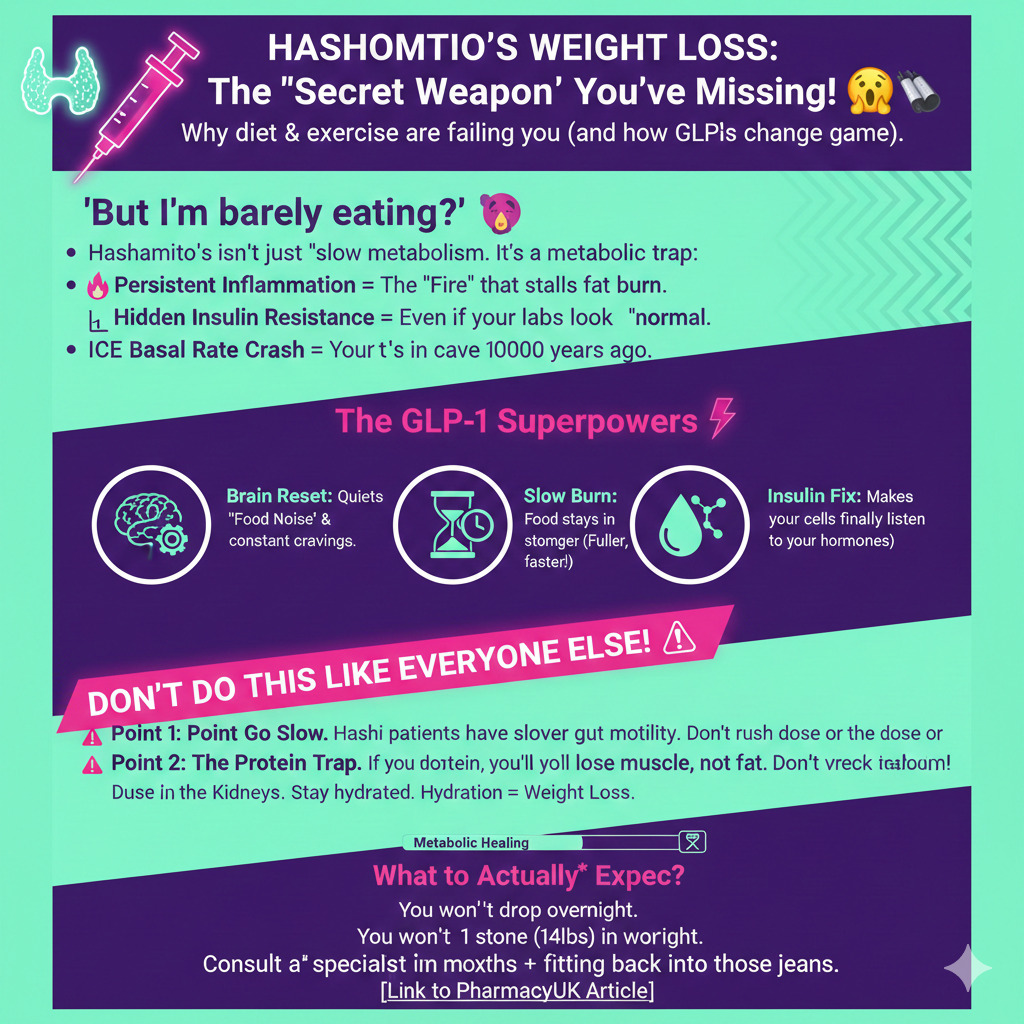
Hashimoto’s disease is more than just low thyroid hormone levels. It is an autoimmune condition in which the immune system attacks the thyroid gland, causing persistent inflammation in the body. This inflammation disrupts metabolic processes, including the basal metabolic rate, fat burning, carbohydrate processing, temperature regulation, and appetite control. Even mild impairments can lead to metabolic resistance.
Even with a controlled diet and regular exercise, many women with Hashimoto’s disease see little weight change. This is not due to a lack of effort but rather to underlying biological factors. Insulin resistance is common, even when blood glucose and HbA1c levels are normal. This resistance encourages fat storage, especially around the abdomen, increases hunger, and makes weight loss particularly difficult. Standard advice often overlooks these challenges.
Understanding GLP-1 Medications: What They Are and How They Work
GLP-1 receptor agonists represent an entirely different approach. Medications, such as semaglutide (marketed as Ozempic and Wegovy) and tirzepatide (Mounjaro), were originally developed to treat type 2 diabetes. They work by mimicking a natural hormone produced by the body after eating, called glucagon-like peptide-1. This hormone plays several crucial roles:
- Slowed gastric emptying: Food stays in the stomach longer, keeping you feeling fuller.
- Enhanced satiety: You feel satisfied with less food.
- Reduced appetite: Constant food thoughts quieten down.
- Stabilised blood sugar: Post-meal glucose spikes are smoothed out.
- Improved insulin sensitivity: Cells respond better to insulin.
Improving insulin sensitivity is especially important for women with Hashimoto’s disease. Addressing insulin resistance can lead to significant progress when standard methods fail.
Unlike traditional diets that often result in persistent hunger, GLP-1 medications support natural satiety, making weight loss achievable and sustainable.
What Using GLP-1 Actually Looks Like With Hashimoto’s
In clinical practice, a recognisable pattern often emerges with Hashimoto’s patients who start GLP-1 therapy. Typically, these are women whose TSH levels are stable on levothyroxine, yet they have gained one to two stones since diagnosis, despite maintaining consistent eating and exercise habits. When starting semaglutide at a low dose, many report significant changes within the first few weeks.
The most commonly noted improvement is reduced food preoccupation. Rather than constant thoughts about eating or intense cravings an hour after meals, patients describe feeling genuinely satisfied after normal portions. Energy levels, which often fluctuate unpredictably in Hashimoto’s, tend to stabilise throughout the day. Over six months, weight loss of around one stone is typical, alongside reductions in waist circumference of two to three inches and improvements in inflammatory markers on blood tests.
What makes this particularly significant is that these results occur without extreme calorie restriction or excessive exercise regimes. The medication appears to address the underlying metabolic dysfunction, particularly insulin resistance and disrupted satiety signalling, that makes conventional weight-loss approaches so ineffective for women with autoimmune thyroid disease.
The Side Effects Challenge: Why Hashimoto’s Patients Need Extra Care
However, this experience is not straightforward. One of the hallmarks of hypothyroidism is slower gut motility, which means that food moves through the digestive system more slowly than it should. GLP-1 medications further slow down gastric emptying. When these two factors are combined, digestive side effects can be significantly more pronounced than in metabolically healthy individuals.
Common Side Effects to Expect:
- Gastrointestinal distress: Nausea, bloating, and heartburn
- Acid reflux: Particularly troublesome at night
- Constipation: Can be severe if not managed proactively
- Fatigue: Especially during dose escalations
Many endocrinologists who specialise in thyroid disorders now recognise that women with Hashimoto’s disease often require slower dose escalation than the standard protocols recommend. Starting too quickly can lead to severe nausea, making it impossible to keep food down.
A slower approach, sometimes staying on the starter dose for an additional month before increasing, allows the body to adapt and makes side effects far more manageable.
The Nutrition Trap Nobody Warns You About
This is perhaps the most important point that gets overlooked in all the excitement about appetite suppression. When not hungry, it can unintentionally lead to undernutrition. For women with Hashimoto’s disease, who already face higher risks of fatigue, muscle weakness, hair thinning, and brittle nails, inadequate nutrition can be genuinely harmful.
If you are only consuming 800 or 900 calories a day because your appetite is suppressed, you are almost certainly not getting enough protein. Insufficient protein intake accelerates muscle loss, which lowers the resting metabolic rate and may increase the risk of long-term weight regain.
Your body requires protein to maintain muscle mass, produce hormones, support immune function, and keep your hair, skin, and nails healthy.
Practical Protein Strategy:
- Breakfast: Greek yoghurt with berries and nuts
- Lunch: Chicken salad with olive oil dressing
- Dinner: Grilled fish or scrambled eggs with vegetables
- Target: Aim for 80–100g of protein daily
- Exercise: Include resistance training at least twice weekly
This is not optional. This is essential for preserving metabolic rate and long-term health. Using GLP-1 medication requires more nutritional awareness.
The Kidney Safety Question You Must Understand
In early 2025, a review published in Primary Care Diabetes raised important questions regarding kidney function in patients using GLP-1 medications. The researchers found modest but consistent changes in kidney biomarkers in some patients, particularly in those with existing risk factors. These changes were not severe enough to rule out treatment, but they indicate that kidney function should be monitored, especially during the first few months.
The challenge is that chronic kidney disease affects approximately 7.2 million people, often without symptoms until quite advanced. Kidney concerns seem to be linked to dehydration, vomiting from side effects, rapid dose increases, or extreme calorie restriction. Interestingly, long-term studies suggest that GLP-1 medications might protect kidney health in patients with type 2 diabetes by reducing inflammation.
Protective Measures:
- Get kidney function tested before starting treatment.
- Schedule regular monitoring during the first six months.
- Stay well-hydrated throughout the day.
- Do not escalate doses too quickly.
- Report persistent vomiting or extreme side effects immediately to the physician.
How GLP-1 Affects Your Thyroid Medication
Because GLP-1 drugs slow stomach emptying, there is a theoretical concern that they might affect the absorption of levothyroxine. In practice, significant interactions are uncommon; however, it is worth remaining vigilant. If you notice the return of hypothyroid symptoms after starting GLP-1 therapy, do not dismiss them.
Warning Signs to Watch Out For:
- Sudden unexplained fatigue.
- Increased sensitivity to cold.
- Brain fog or difficulty concentrating.
- Heart palpitations.
- Weight gain despite medication use.
- Worsening hair loss.
If you experience these symptoms, request thyroid function tests and discuss whether a dosage adjustment might be needed. Continue taking your levothyroxine first thing in the morning on an empty stomach, waiting at least 30 minutes before eating, as you always should.
Accessing GLP-1 Medications
This is where many women face significant barriers. The NHS eligibility for GLP-1 medications for weight loss is extremely restricted. The National Institute for Health and Care Excellence (NICE) sets strict criteria: generally a BMI over 35, or over 30 with a co-morbidity such as hypertension or type 2 diabetes mellitus. GPs must refer patients to a Tier 3 Weight Management Service, where waiting lists can stretch for months.
Most women with Hashimoto’s disease seeking GLP-1 therapy end up going private. Private prescriptions typically cost between £150 and £250 per month. If you pursue private treatment, use only properly regulated services registered with the General Pharmaceutical Council (GPhC), ensure that you receive proper medical oversight (not just an online questionnaire), and work with a prescriber who understands thyroid disease and will arrange appropriate monitoring.
Important Considerations for Private Treatment:
- Only use properly regulated services registered with the General Pharmaceutical Council (GPhC).
- Ensure that you receive proper medical oversight and not just an online questionnaire.
- Work with a prescriber who understands thyroid disease.
- Confirm that monitoring and follow-up care are included in the plans.
- Check what happens if you experience severe side effects.
Setting Realistic Expectations for Success
Here is the truth that nobody wants to hear: weight loss in women with Hashimoto’s is often slower than in metabolically healthy individuals, even with GLP-1 support. You are unlikely to observe the dramatic transformations that make headlines. A loss of half a stone to a stone over six months is more typical and is still a meaningful success.
However, many women discover that weight loss is more sustainable and comes with other significant improvements. Better energy levels, reduced joint pain, improved sleep quality, less inflammation, and perhaps most significantly, a sense that your body is finally working with you rather than against you. After years of feeling as if one is fighting a losing battle, the psychological shift is enormous.
Conclusion
GLP-1 receptor agonists represent a powerful tool for addressing metabolic dysfunction in Hashimoto’s thyroiditis; however, they are not a magic cure. They do not address autoimmune attacks on the thyroid, do not replace comprehensive thyroid care, and are not suitable or necessary for everyone.
When prescribed thoughtfully and monitored appropriately, they can address insulin resistance and appetite dysregulation, which makes weight management so difficult with autoimmune thyroid disease. This is not related to rapid weight loss. It is about long-term metabolic health, symptom improvement, and regaining a sense of control over one’s body.
Medication should be one component of a broader strategy that includes optimised thyroid hormone replacement, adequate sleep, stress management, resistance training, and proper nutrition. If you are considering this route, have an honest conversation with your GP or endocrinologist. Ask about kidney function monitoring, discuss the slower titration schedules that often work better for thyroid patients, and ensure that you have a clear plan for nutritional support and follow-up care.
The promise of GLP-1 therapy for women with Hashimoto’s thyroiditis is real, but so are the practicalities and potential risks. Understanding both will help you make an informed decision that is right for your body, health, and life. Your Hashimoto’s journey is already sufficiently complicated. Any treatment you add should improve the situation and not create new problems.
References
Primary Care Diabetes. (2025). GLP-1 receptor agonists and renal biomarkers: A comprehensive review. https://www.sciencedirect.com/science/article/abs/pii/S0261561425002778
National Institute for Health and Care Excellence (NICE). (2023). Semaglutide for managing overweight and obesity [TA875]. https://www.nice.org.uk/guidance/ta875
Wilding, J. P. H., et al. (2021). Once-Weekly Semaglutide in Adults with Overweight or Obesity. The New England Journal of Medicine. https://www.nejm.org/doi/full/10.1056/NEJMoa2032183