A novel combination of a cannabinoid receptor 1 (CB1) antibody with the widely used weight-loss drug semaglutide has delivered statistically superior results in early clinical testing, according to top-line data from a Phase 2a study. The findings suggest that this CB1 antibody plus semaglutide weight loss benefit could represent a meaningful advance in the treatment of obesity, potentially offering greater efficacy than semaglutide alone.
Weight-loss drugs based on glucagon-like peptide-1 (GLP-1) receptor agonists such as semaglutide have transformed obesity care in recent years, helping millions to shed significant weight. But despite their success, many patients struggle to sustain long-term weight loss and achieve further reductions beyond what GLP-1 therapy alone can deliver. The new study, known as CBeyond, explored whether adding a peripherally restricted CB1 antibody , nimacimab , could amplify semaglutide’s effects.
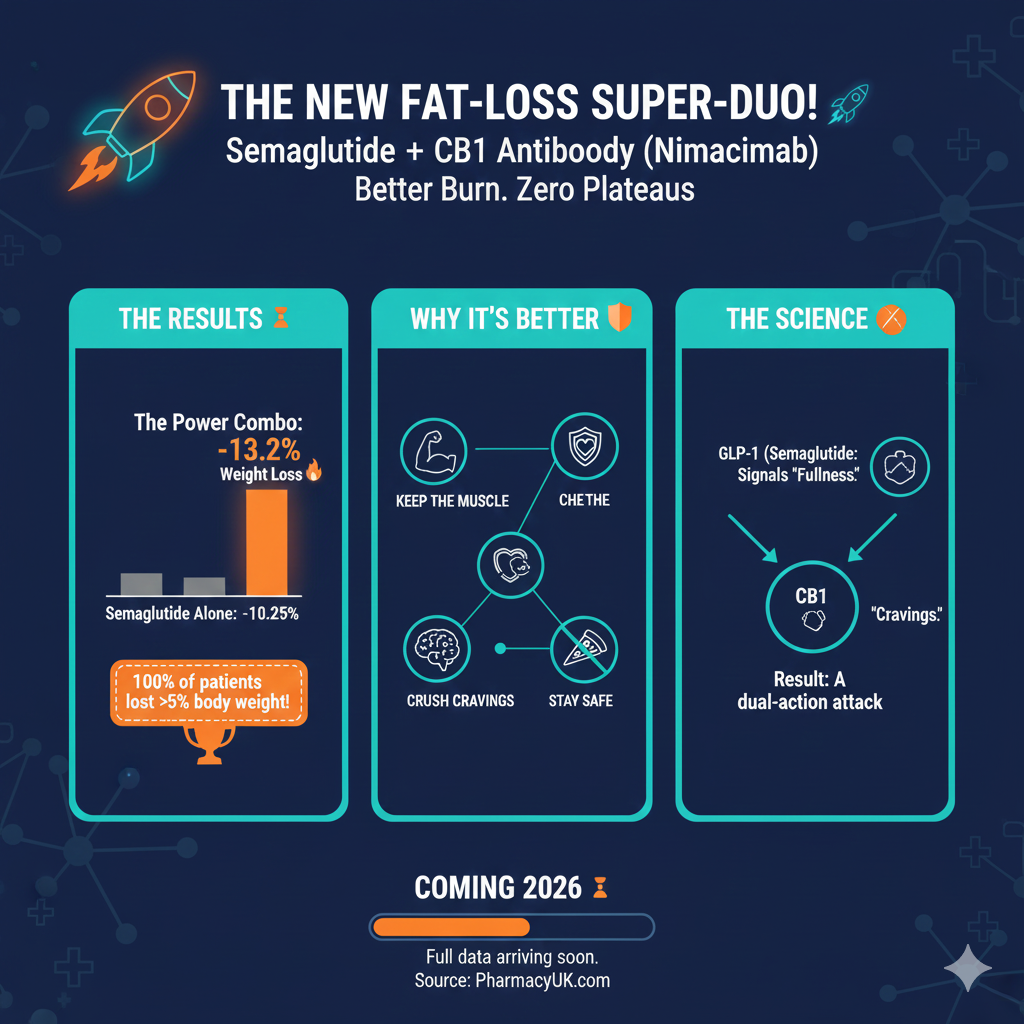
The Phase 2a trial enrolled adults with overweight or obesity and compared four treatment groups: nimacimab alone, placebo, semaglutide alone, and nimacimab plus semaglutide. After 26 weeks of treatment, the combination group achieved a mean weight reduction of −13.2%, compared with −10.25% for semaglutide monotherapy , a statistically significant difference (p = 0.0372) that supports the case for a CB1 antibody plus semaglutide weight loss benefit.
While nimacimab as a standalone therapy did not meet its primary endpoint for weight loss versus placebo , a result that the investigators attributed to lower than expected drug exposure at the tested dose , the synergy with semaglutide was notable.
In a per-protocol analysis that excluded participants with major deviations from the treatment protocol, 100 per cent of those receiving the combination achieved more than 5 per cent weight loss, compared with 85 per cent in the semaglutide-only group. Similarly, 67 per cent of combination recipients achieved more than 10 per cent weight loss versus 50 per cent with semaglutide alone.
In addition to body-weight outcomes, the study observed improvements in body composition for those on the combination therapy. Participants treated with nimacimab and semaglutide showed a superior lean-mass-to-fat-mass ratio compared with both semaglutide monotherapy and placebo, suggesting that the weight loss may have involved proportionally more fat loss.
Equally important for clinicians and patients alike, the combination did not show an increased rate of common side effects associated with GLP-1 therapy, such as gastrointestinal issues. Rates of nausea, vomiting and other GI disturbances were similar between the combination and semaglutide groups. No new neuropsychiatric safety concerns , a historical worry with earlier CB1-targeting drugs , were observed.
Obesity specialists have long highlighted the challenge of balancing efficacy with tolerability. GLP-1 therapies are generally approved for adults with a body mass index (BMI) of 30 kg/m² or more, or 27 kg/m² with co-morbidities, alongside diet and lifestyle support. Although weight loss can be substantial, issues such as rebound weight gain after treatment cessation remain common and are areas of ongoing research.
The topline CBeyond results underscore the importance of further research before any new treatment could reach clinical practice. Skye Bioscience , the developer of nimacimab , is already evaluating higher dosing strategies and is conducting a 26-week extension of the study to better understand the durability of effects over a longer period. Data from this extension are expected in early 2026.
Industry analysts have also taken note of additional early evidence suggesting that patients on the combination experienced less rebound weight gain after treatment stopped than those on semaglutide alone, hinting at a potential role for nimacimab as a maintenance option.
Nonetheless, experts caution that interpretation should be tempered by the Phase 2a trial’s relatively small size and the fact that nimacimab monotherapy did not achieve its primary study goal at the dose tested. More extensive Phase 2 and Phase 3 investigations are needed to validate the initial promise and clarify how best to integrate this approach alongside established obesity therapies.
The CB1 antibody plus semaglutide weight loss benefit adds to wider efforts to push beyond traditional GLP-1 monotherapy. Other combination approaches, including pairing semaglutide with amylin analogues or dual-hormone agonists, have also shown enhanced weight reductions in separate research, reflecting a rapidly evolving field of metabolic drug development.
As obesity rates continue to rise globally, new treatment options that deliver greater efficacy with favourable safety are high on the priority list for healthcare systems and patients alike. Although the therapy described here remains investigational, these early results provide a compelling direction for future obesity research.
Sources:
- Topline CBeyond Phase 2a data on nimacimab plus semaglutide vs semaglutide alone: Skye Bioscience press release. Skye Bioscience, Inc.
- Nimacimab combination weight-loss benefit details: Investing.com report. Investing.com
- Third Quarter 2025 update on nimacimab including waist circumference and rebound weight data: GlobeNewswire. BioSpace
- UK context on GLP-1 weight-loss medications and typical effects. ScienceDaily
- Broader combination therapy strategies in weight loss. American College of Cardiology