
Thousands of adults who might benefit from GLP-1 receptor agonist obesity treatments are being forced to weigh up their health against high costs and limited NHS access , a dilemma that is widening health inequalities across the country.
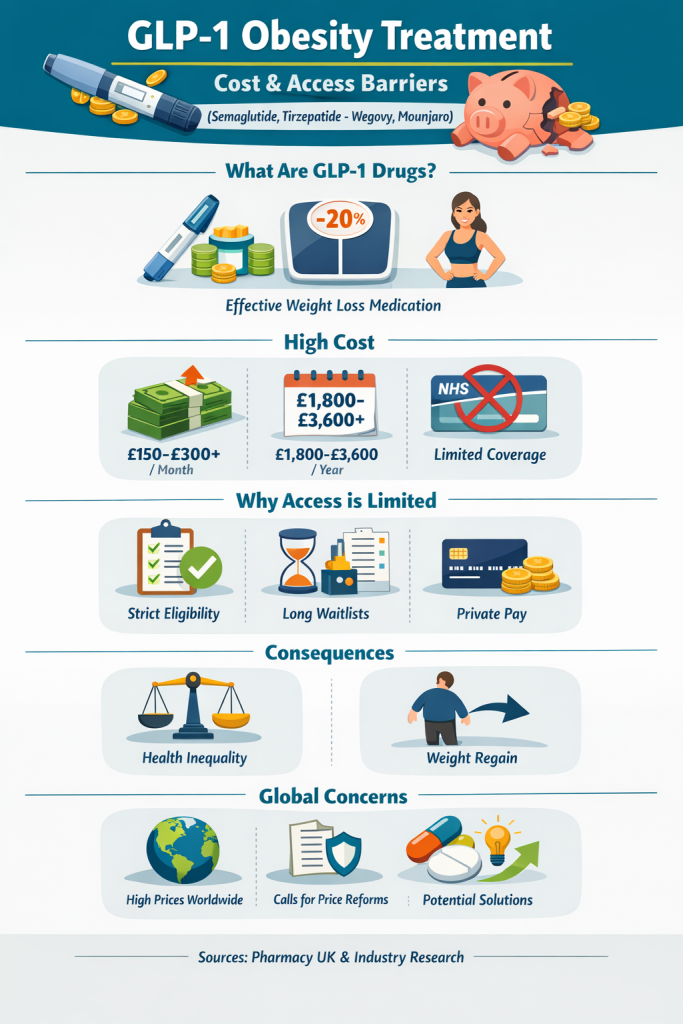
GLP-1 drugs such as semaglutide (often prescribed as Wegovy) and tirzepatide (branded as Mounjaro) have shown significant real-world and clinical trial results in helping people living with obesity lose weight , sometimes up to 20 % of their body weight when used alongside diet and exercise , but many cannot access them through the NHS and are instead turning to private prescriptions at substantial personal cost.
New guidance from the National Institute for Health and Care Excellence (NICE) outlines how tirzepatide will be rolled out on the NHS, beginning with those with the highest clinical need , such as adults with a body mass index (BMI) above 35 and at least one weight-related condition like type 2 diabetes or cardiovascular disease.
Yet even for these priority groups, NHS routes remain constrained. Only a fraction of the millions who meet clinical eligibility are expected to receive prescriptions through phased implementation, partly due to workforce capacity and budget pressures. Local NHS services must develop pathways for prescribing and monitoring, which is taking time and leaving many patients on waiting lists.
These strict criteria and roll-out challenges mean that most people seeking weight-loss treatment outside diabetes care currently must either wait , sometimes months , or go private, fuelling concerns about equity of access.
For those opting to access GLP-1 drugs privately, the financial burden can be steep. Private prescriptions for weekly injectable treatments semaglutide or tirzepatide generally range between about £150 and £300 per month, depending on the drug, dose and provider. Over a year, this can translate to £1,800–£3,600 or more, which many people simply cannot afford.
Doctors and public health experts warn that where access depends on personal wealth, inequalities widen , especially since obesity disproportionately affects people on lower incomes. Those with deeper pockets can afford life-changing medicines, while those with more limited means must wait or forego treatment entirely.
This cost barrier isn’t just financial. Even with access, side effects such as nausea and fatigue can make treatment difficult to tolerate, and stopping use often leads to weight regain , adding to disappointment for many who struggle with long-term weight management. Combined with out-of-pocket costs, these factors can make the treatment journey feel like a gamble.
Public health voices have highlighted that the current model , one of restricted NHS access alongside a booming private market , may inadvertently widen health disparities. In England it’s estimated that while NHS prescriptions for GLP-1 drugs have risen sharply in recent years, the demand far exceeds what public services can currently deliver, and many people are accessing treatments privately.
NHS England figures also suggest that tens of thousands of people are set to receive tirzepatide over the next few years as part of the official roll-out. But NICE estimates that millions more could benefit if eligibility criteria were broader.
Clinicians emphasise that medication alone is not enough. GLP-1 therapies are most effective when combined with structured lifestyle support , including dietary guidance, psychological counselling, and exercise programmes , to help patients maintain results and adopt sustainable habits.
In recognition of this, some private services and support programmes have emerged to help people combine GLP-1 treatment with behaviour change support, acknowledging that just providing drugs without follow-up care risks disappointing outcomes.
There are some positive developments on the horizon. Competition among pharmaceutical providers, including the development of oral GLP-1 formulations and possibly cheaper alternatives, could improve accessibility in coming years. Oral versions under development are expected to be simpler to administer and may lower some barriers to use.
However, these options aren’t widely available yet, and for now many patients remain in a position where cost , not clinical need , determines access. This raises broader questions about how the health system can integrate innovative treatments while maintaining equity of care.
Sources:
- NICE guidance on tirzepatide roll-out, NHS prioritisation and criteria.NICE
- NHS and obesity medication access challenges.Imperial Medical Practice
- Private cost estimates for weight-loss injections in the UK.Bolt Pharmacy
- Trends in UK GLP-1 prescribing and inequalities analysis.The King’s Fund+1
- Lifestyle and support integration with medication.tctmd.com
- New UK weight-loss drug delivery developments (oral GLP-1s).secondnature.io
- Life-Changing Drugs, Out of Reach: Obesity Treatment and the Cost Barrier by Shreyasi (December 19, 2025).