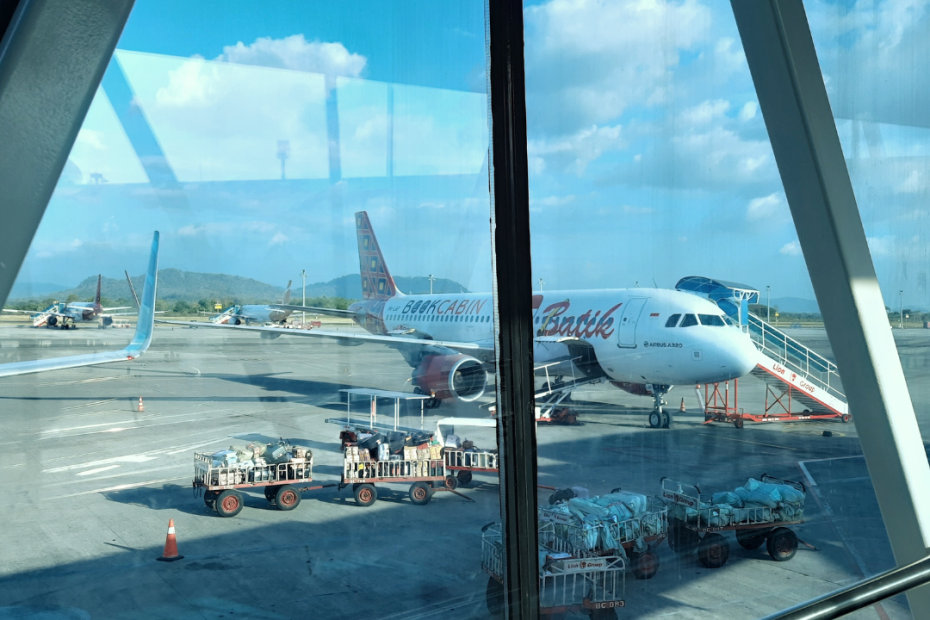
Airlines always hunt for savings wherever they can find them. Now, a new financial analysis suggests that a rise in the use of GLP-1 weight-loss drugs , medicines like Ozempic and Wegovy , could deliver up to £470 million a year in fuel cost savings for major carriers in the US. That’s because lighter passengers mean lighter planes and, ultimately, less fuel burned.
Fuel is one of the biggest single costs for airlines. These savings are subtle , but in an industry where margins are tight, even a small reduction matters. This story may seem quirky, but the implications reach far beyond aviation.
The analysis was conducted by Jefferies, a global financial services firm. It looked at how the growing popularity of GLP-1 medications in the U.S. could change average body weight among flyers. According to Jefferies, if average passenger weight were to fall by around 10 per cent, total aircraft weight would decrease. This could lead to a 1.5 per cent reduction in fuel consumption across flights for major airlines.
Jefferies modelled this effect for the four largest airlines , American Airlines, Delta Air Lines, Southwest Airlines and United Airlines , and concluded that fuel savings could reach roughly £470 million annually. That sum represents about 1.5% of their combined jet fuel bills, which are expected to total about £31.27 billion in 2026.
Airlines are already obsessed with reducing aircraft weight. Over decades, they have cut ounces wherever possible , from lighter cabin items to fewer printed materials , to trim fuel usage. But passenger weight has always been outside their control. Now, a broad shift in public health could be changing that.
The physics is straightforward: heavier aircraft need more energy , and thus more fuel , to get off the ground and stay in the air. That directly affects operating costs. One hypothetical example from Jefferies illustrates this with a Boeing 737 Max 8: reducing the average passenger weight from 180 pounds to 162 pounds cuts the aircraft’s total weight substantially, enough to deliver measurable fuel savings when scaled across fleets and flights.
Even a small percentage reduction in fuel usage can ripple through an airline’s balance sheet. Jefferies estimates that a 1.5 per cent cut in fuel consumption could translate into about a 4 per cent uplift in earnings per share, drawing investor interest.
GLP-1 drugs, such as semaglutide-based treatments, are designed to mimic a hormone involved in appetite regulation. This helps some people control appetite and lose weight. Originally approved for type 2 diabetes and obesity management, these drugs have become much more widely used in recent years. Analysts note that broader access , including the introduction of oral versions , may accelerate adoption and create further knock-on effects.
These medications are now part of mainstream discussions, not just healthcare. As more people lose weight through GLP-1 therapies, the aggregate reduction in passenger body mass becomes significant for airlines. That trend is what Jefferies and other analysts believe could underpin the projected savings.

While the idea of airlines benefiting from population weight loss seems straightforward, economists and industry analysts urge caution. Human weight varies widely, and not all changes in average weight can be attributed to GLP-1 use alone. Some people also stop treatment for various reasons, including cost, side effects, or medical advice, which could limit long-term impact on overall passenger weight trends.
A report in Business Today highlighted that Jefferies’ figures do not assume changes in ancillary revenues , for example, reduced onboard snack purchases , nor do they assume airlines will change their fuel buying strategies immediately. So while fuel savings could materialise over time, they are not guaranteed to reshape airline pricing or spend patterns overnight.
Although this analysis centres on U.S. carriers, the principle applies globally. All commercial airlines face hefty fuel costs, and many UK carriers , including British Airways, easyJet and Ryanair , might experience similar benefits if average passenger weight declines in their markets. Even a small proportional reduction in fuel burn could improve profit margins across the aviation sector.
Currently, airlines worldwide use standard average passenger weight figures to calculate fuel loads. If those figures begin to fall because of long-term health trends, carriers may eventually adjust their calculations , potentially improving efficiency across the board.
The idea that weight-loss drugs could indirectly boost airline efficiency may seem odd at first. But it reflects a broader trend: health-related changes can have ripple effects far beyond medicine and diet. If GLP-1 therapies continue to shape public health, they could quietly deliver meaningful savings to an industry where every kilogram counts.
As airlines worldwide grapple with fuel price volatility and economic pressures, this unexpected “fuel saving from health care” story shows how cross-sector trends can reveal new opportunities.
Sources:
- Fox Business. (2026, January 19). Airlines have $580 million reasons to like GLP-1 weight-loss drugs, analysis finds. FoxBusiness.com. https://www.foxbusiness.com/economy/airlines-have-580-million-reasons-like-glp-1-weight-loss-drugs-analysis-finds
- Lighter flyers, lower fuel burn: Weight-loss drugs may cut US airline fuel bills by $580 million. (2026, January 18). BusinessToday.in. https://www.businesstoday.in/latest/corporate/story/lighter-flyers-lower-fuel-burn-why-weight-loss-trends-could-save-airlines-580-million-511358-2026-01-18/
- Weight loss drugs could save airlines $580 million a year in fuel costs. (2026, January 19). Dexerto.com. https://www.dexerto.com/entertainment/weight-loss-drugs-could-save-airlines-580-million-a-year-in-fuel-costs-3306562/
- Could weight loss drugs change airline economics? (2026). BusinessTraveller.com. https://www.businesstraveller.com/news/weight-loss-airlines-fuel-costs/